

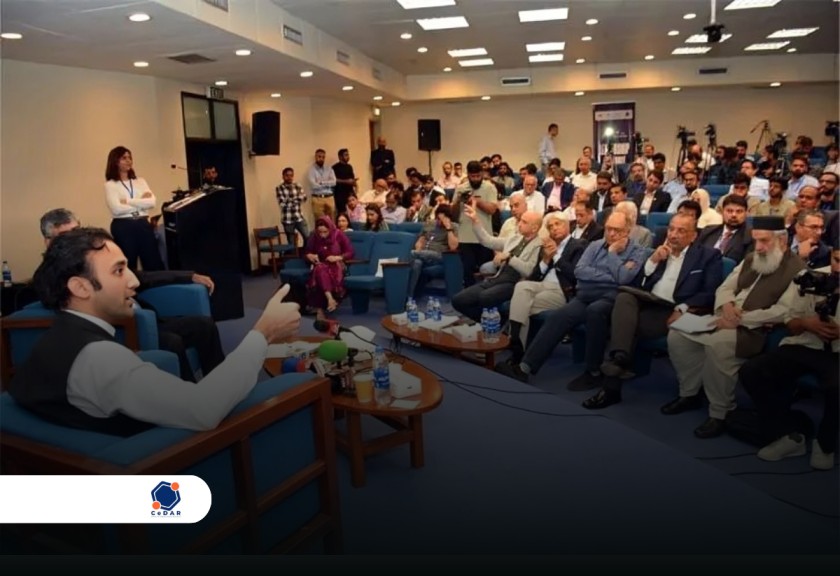
Lahore: Pakistan is taking decisive steps to regulate its rapidly growing digital asset ecosystem, as policymakers and industry experts convened at the Leadership Summit on Blockchain and Digital Assets hosted by the LUMS Centre for Digital Assets Research (CeDAR).
The summit highlighted the urgent need for regulatory intervention, with officials revealing that nearly 40 million Pakistanis are currently engaged in digital asset activities—most of them through informal and unregulated platforms. This widespread adoption, while signaling strong market demand, also raises significant concerns around consumer protection and financial stability.
Push to Formalize the Digital Economy
Government representatives emphasized plans to integrate these users into the formal financial system. Bilal Bin Saqib, Minister of State, stressed the importance of swift action, stating that execution—not just strategy—will determine success. He underscored that a well-defined regulatory framework can both safeguard consumers and unlock innovation within Pakistan’s fintech ecosystem.
Unlocking Efficiency in $38 Billion Remittances
The economic upside of regulation is substantial. Pakistan receives approximately $38 billion in annual remittances, and officials noted that blockchain-based settlement systems could significantly enhance efficiency, reduce costs, and improve transparency. Additionally, regulatory clarity is seen as critical for sustaining the country’s growing freelance economy, which relies heavily on cross-border payments.
Authorities indicated that the proposed regulatory approach has been developed rapidly, backed by strong institutional momentum. This positions Pakistan to play a more active role in shaping global conversations around digital finance, rather than remaining dependent on unregulated channels.
Sandbox Framework and Tokenization Focus
As part of its strategy, the government plans to introduce regulatory “sandbox” environments to safely test blockchain innovations. Initial efforts will focus on asset-backed tokenization, enabling broader access to investment opportunities such as real estate and financial instruments, particularly for smaller investors.
Addressing the Talent Gap
Despite the progress, officials acknowledged a critical shortage of skilled talent in the digital asset space. Saqib identified this as the biggest challenge facing the ecosystem and called for stronger collaboration between banks, technology firms, and academic institutions. He emphasized the importance of continuous learning to support sustainable growth.
The summit will continue to explore the convergence of emerging technologies, including artificial intelligence, with regulated digital finance frameworks as Pakistan advances its policy agenda.
