

QR payments are everywhere.
But at the ground level, trust is still manual.
QR payments are everywhere.
But the experience around them still isn’t.
From small shops to roadside vendors — the acceptance layer is no longer the problem. But at the ground level, something still feels incomplete.
Merchants still pause.
They still check their phones.
They still wait for confirmation.
Payments have gone digital — but the experience still feels manual.
What India Got Right (and What It Became)
India’s payment ecosystem evolved rapidly with UPI.
But what made it powerful wasn’t just the rails — it was how companies built on top of it.
Players like Paytm and PhonePe didn’t just enable payments. They built complete merchant ecosystems:
- QR acceptance
- transaction visibility
- settlement flows
Over time, this created a pattern:
The company that owns the payment flow also owns the device — and ultimately, the merchant relationship.
Soundboxes became a natural extension of that system.
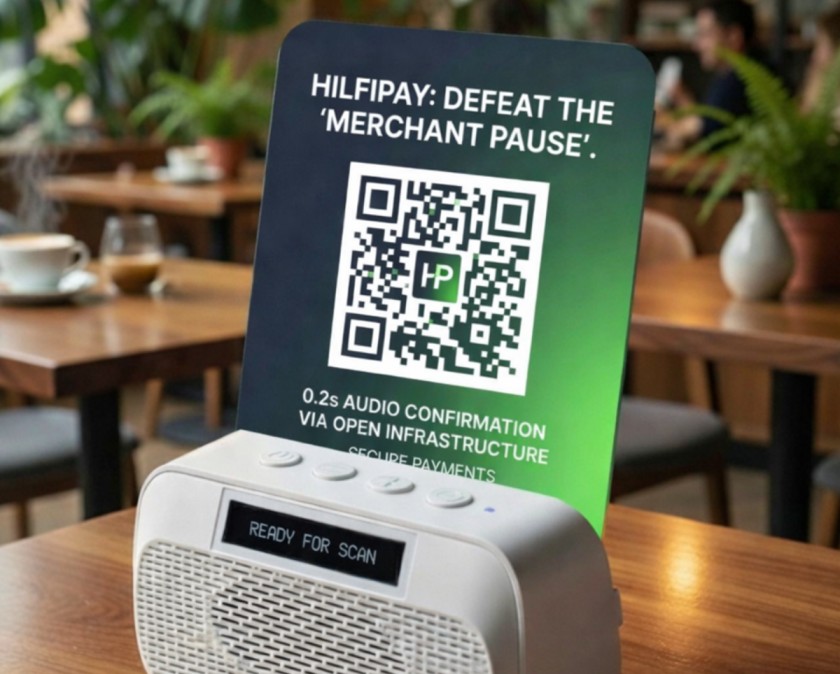
Not just a device — but a trust layer.
A small speaker confirming:
“Payment received.”
That single moment replaced doubt with certainty.
Pakistan Starts From a Different Place
Pakistan is entering a similar phase — but from a very different foundation.
With Raast, the core rails are designed to be open.
That means no single player owns the merchant.
And that changes everything.
The Opportunity Most People Are Missing
Right now in Pakistan:
- QR payments exist
- Payment rails exist
- Wallets exist
But the merchant-side experience is still incomplete.
At the ground level:
- merchants check their phones
- confirmations are delayed
- trust is still manual
The transaction happens — but the experience lags behind.
The Missing Layer
What India solved within closed ecosystems, Pakistan has the chance to solve differently.
A shared, neutral layer for real-time merchant confirmation.
Not tied to a single wallet.
Not locked into a single ecosystem.
A device + infrastructure layer that works across banks and wallets.
What Comes Next
The next phase of digital payments won’t be about enabling transactions.
That part is already solved.
It will be about:
- reducing friction
- building trust
- improving real-world usability
Because at the ground level, payments aren’t judged by APIs.
They’re judged by moments.
And the moment a merchant hears (in the local language):
“Payment received.”
That’s when digital payments truly replace cash.
We’re building the open infrastructure to solve the ‘Merchant Pause.’ If you’re a retailer or a developer in Pakistan and the MENA region, let’s connect.
Author Brief:
Fazal Wahid is a startup builder and the founder of HilfiPay and TallyTask. With a deep background as a former Head of Engineering, he specializes in building high-scale AI and Fintech solutions that solve ground-level friction. Through HilfiPay, he is currently pioneering the “Open Audio Infrastructure” layer to eliminate transaction latency and drive mass digital adoption across the MENA and Pakistan payment corridors.
Fazal wahid’s linkedin: Fazal Wahid | LinkedIn
Useful Links:
Hilfipay: Hilfi Pay – HilfiTech
Tallytask: tallytask – Tasks and Cash Simplified
