

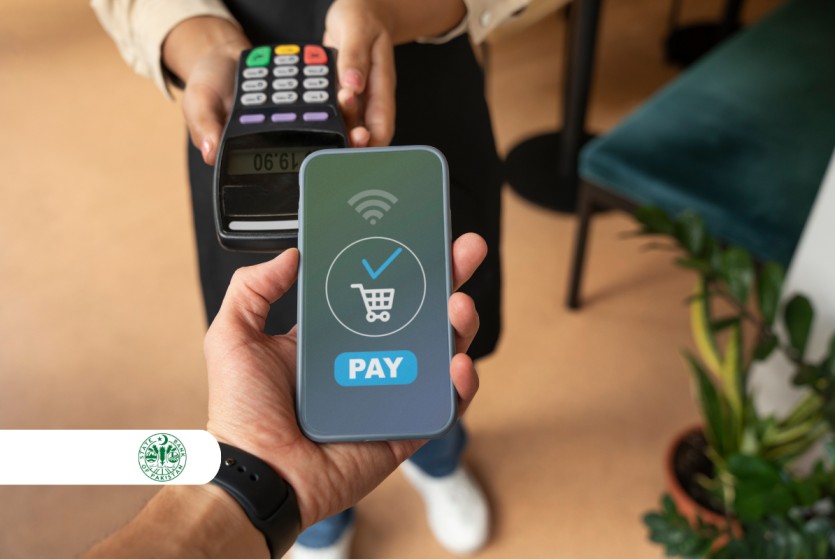
- All relevant ministries, departments, and regulatory bodies instructed to begin the process of enabling Raast QR codes
ISLAMABAD: The Ministry of Finance has sought update on implementation of printing of Raast QR code in public utility companies which has been launched by the State Bank of Pakistan (SBP).
In a letter addressed to the administrative ministries of regulatory bodies and their respective chairpersons, the Ministry emphasized that this initiative aligns with the Prime Minister’s vision to accelerate the digitalization of payments across the country.
As part of the broader push to enhance ease of payments, improve transparency, and boost operational efficiency, all relevant ministries, departments, and regulatory bodies have been instructed to begin the process of enabling Raast QR codes on all utility bills under their jurisdiction.
Digital payments: Utility bills to have QR codes
The Raast Instant Payment System —developed and operated by the SBP and supported by Karandaaz — offers a secure, real-time, and cost-effective platform for Person-to-Government (P2G) and Person-to-Business (P2B) transactions.
A key feature of the system is the dynamic QR code functionality, which allows customers to conveniently make payments by scanning a QR code through their bank’s mobile application.
This initiative is expected to: (i) improve convenience for payers through interoperable and instant digital payment options; (ii) reduce cash handling and the associated reconciliation burden for utility service providers; and (iii) enhance transparency and traceability of government receipts.
In this regard , all utility service providers operating under the Cabinet Division, Power Division, Petroleum Division, Telecommunication and Telecom Division and Interior Division (including but not limited to electricity, gas and telecom) have been advised to: (i) coordinate with their respective banks to integrate dynamic Raast QR code generation within their billing systems; (ii) ensure that Raast QR codes are printed or digitally displayed on all utility bills issued to consumers; and (iii) share implementation timelines and periodic progress updates with the Ministry of Finance and the State Bank of Pakistan’s Digital Innovation& Settlement Department (DISD), which is the custodian of Raast.
The Raast teams at the SBP and Karandaaz will jointly support this initiative and are available to provide technical advisory to all utility companies and ministries. Karandaaz in collaboration with SBP will organize a webinar to address any queries that relevant departments may have regarding integration with financial institutions for receiving payments through Raast’s dynamic QR.
According to the Concept Note of Finance Ministry, utility bill payments in Pakistan currently operate through a reference number-based mechanism. Consumers use this reference number to fetch their due amounts via banking apps or over-the-counter agents and complete payments manually. While this model is functional, it lacks seamlessness and user-friendliness, and involves operational inefficiencies for both consumers and billers.
To modernize this process and align with the Government of Pakistan’s cashless agenda, the Raast
Instant Payment System offers an advanced solution using Dynamic QR codes. This initiative is being spearheaded by the Ministry of Finance in collaboration with the SBP.
Utility companies operate internal billing servers which generate consumer bills using a unique reference number, calculating two payable amounts (before and after the due date).Bills are dispatched physically and made available through digital banking channels for consumer convenience.
Consumers use their bank’s mobile app or internet banking to input the reference number, fetch due amounts, and complete payments.
Real-time integration with banks or aggregators marks the bill as paid and reconciles the transaction.
Two functionalities under Raast are particularly relevant: (i) Raast Person-to-Merchant (P2M) with Dynamic QR:A QR code is generated with the bill amount and recipient (utility company) details embedded. No manual input is required; upon scanning, payment is instantly processed and reconciled; and (ii) Raast Request to Pay (RTP): Enables real-time payment initiation by the utility company. While useful in other contexts, for physical or print-based bills, Dynamic QR is more appropriate.
The proposed integration for Utility Bill Payments via Dynamic QR are as follows: (i) at bill generation, utility companies will also generate a Raast Dynamic QR, embedding consumer-specific amount and company IBAN; (ii) this QR code will be printed on the physical bill or displayed on the digital version; (iii) customers can scan this QR using any Raast-enabled banking app, confirm payment, and instantly complete the transaction; and (iv) payment will be debited from the customer’s account and credited to the utility provider’s account, with real-time reconciliation. The expiry date of the QR can be aligned with the bill due date (custom expiry support maybe required from participating banks and Raast).
Finance Ministry further stated that each utility company may engage its respective bank to provide Raast Dynamic QR services. The integration will require technical development to generate dynamic QRs during bill creation.
The SBP’s Digital Innovation and Settlement Department (DISD), can be contacted for technical advisory for smooth implementation.
It will simplify payment experience for consumers (scan-to-pay from any bank app) and eliminate manual errors and late payment friction.
It will reduce cash handling, streamlines reconciliation, and improves operational efficiency, besides enhances transparency, traceability, and digital audit trail for government and utility providers.
Ministries and regulatory bodies have been requested to direct all utility service providers under their remit to initiate engagement with their banking partners for Dynamic QR integration. Implementation timelines may vary based on technical readiness, but this transformation is a key enabler of Pakistan’s cashless strategy.
