

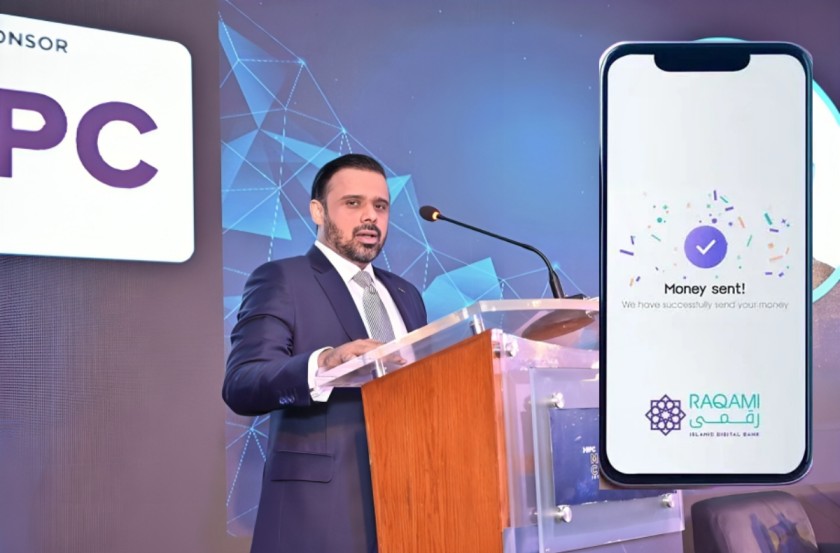
Raqami Islamic Digital Bank (RIDB), backed by the Kuwait Investment Authority, plans to invest $100 million over the next five years as it prepares to launch commercial operations in February, marking Pakistan’s first fully Shariah-compliant digital retail bank, Bloomberg reported.
The Karachi-based lender has completed its pilot phase and is targeting at least one million customers within three years, with a business model centred on small- and medium-sized enterprises, freelancers and other underserved segments.
Chief Executive Officer Umair Aijaz said Pakistan presents a strong opportunity for digital banking, particularly in SME financing, which has shown rapid adoption globally. He said the bank was focused on building scale through technology-led solutions rather than physical branches.
To date, Raqami has invested around Rs8 billion, or $28.6 million, to reach the launch stage. Aijaz said the bulk of the remaining capital will be allocated to technology infrastructure, human resources, and information security, with the bank aiming to achieve break-even within four years.
As part of its digital buildout, RIDB has partnered with Euronet Pakistan Pvt Ltd to strengthen its payments and transaction processing capabilities. The partnership includes payment switching, card management, credit cards, POS and e-commerce acquiring, ATM control and fraud management services. Aijaz said the collaboration would support a scalable, cloud-ready platform and improve operational efficiency and customer experience.
The bank has also constituted a five-member Shariah Board, chaired by Dr Mufti Muhammad Imran Ashraf Usmani, to ensure all products and transactions comply with Islamic principles. Board members said the bank would help expand access to Shariah-compliant financial services and support inclusive growth.
RIDB’s entry comes amid a broader push to digitise financial services in Pakistan. The State Bank of Pakistan has granted No-Objection Certificates to five applicants for digital banking licences, including Easy Paisa, Hugo Bank, KT Bank, Mashreq Bank UAE and Raqami, under a framework introduced in January 2022 to allow full-service digital banks without physical branches.
Chairman Abdullah Al-Mutairi said Pakistan remains a key growth market for Islamic finance, citing a population of about 240 million and an Islamic banking industry valued at more than Rs8 trillion as of June 2023, representing nearly 20 percent of the financial sector.
Raqami plans to serve a broad customer base spanning SMEs, agriculture, blue-collar workers, women, youth and freelancers, positioning itself as a digital-first Islamic bank aimed at deepening financial inclusion while strengthening Pakistan’s evolving digital banking ecosystem.
